Stone placement in a Japanese garden: the principles behind the practice
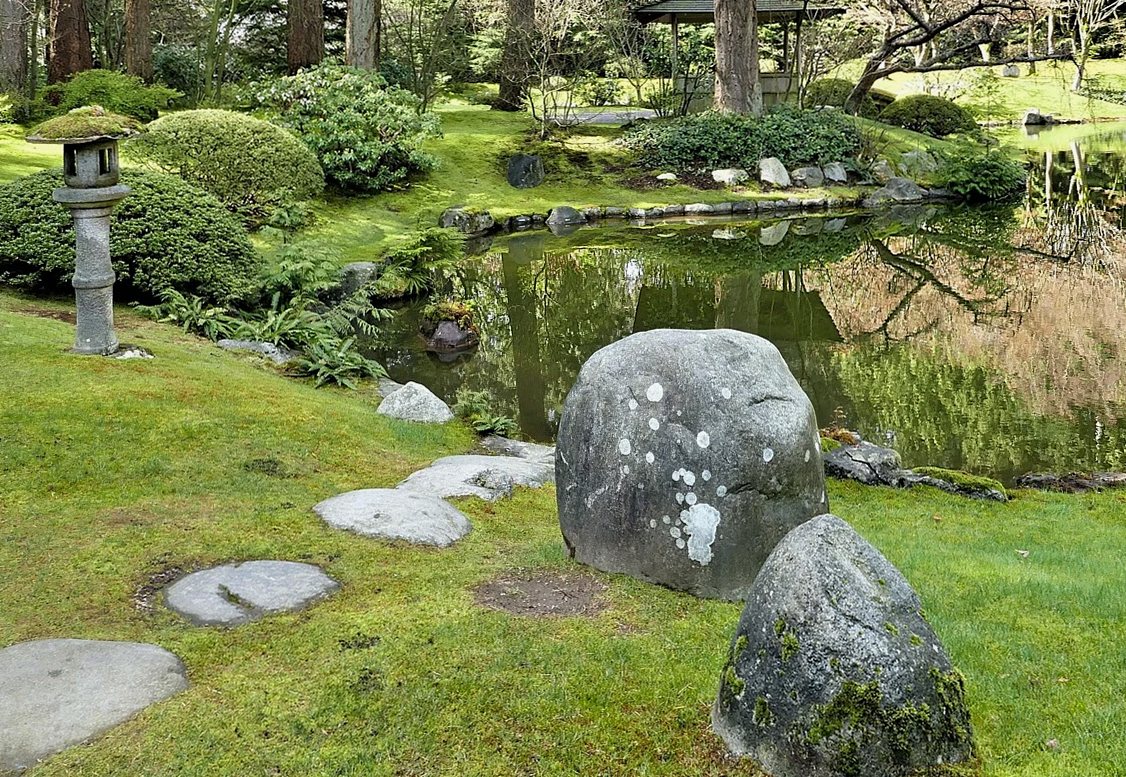
Stones in a Japanese garden are not decorative objects placed for visual interest. They are structural elements that define the character of a space, direct movement through it, and in the older tradition, represent specific natural forms: mountains, islands, animals in repose. Getting the placement wrong does not just look odd. It changes what the garden is.
The three basic orientations
Japanese garden design distinguishes between three basic stone orientations: vertical (tate-ishi), horizontal (shiki-ishi), and diagonal (naname-ishi). Vertical stones represent mountains or standing figures and create a sense of height and presence. Horizontal stones represent the earth, water, or resting forms and create stability. Diagonal stones create movement and transition between the two.
In a small garden, you rarely need more than three to five stones to establish a composition. The relationship between the stones matters more than the number. A single vertical stone next to a horizontal one creates a complete statement. Adding more stones without understanding the existing relationship usually weakens it.
Burial depth and stability
A stone that sits on the surface of the soil looks placed. A stone that is buried to one-third of its depth looks as though it has always been there. This is the most practical principle in Japanese garden stone work and the one most often ignored by beginners.
The buried portion should be the widest part of the stone, which gives stability and prevents tipping. In a garden with clay soil, which is common in the Pacific Northwest, dig the hole slightly deeper than needed and add a layer of gravel at the base to prevent the stone from sinking further over time.
Avoiding common mistakes
The most common mistake is placing stones in a straight line. Japanese garden design avoids symmetry and straight lines because they read as human-made rather than natural. Arrange stones in odd numbers (three, five, seven) and at varying distances from each other.
The second most common mistake is choosing stones that are too small for the space. A stone that looks large in a garden center will look modest once it is in the ground and surrounded by plants. When in doubt, go larger.
The garden design review service includes specific stone placement suggestions based on photographs of your space. If you are planning a new garden or reworking an existing one, that is the most direct way to get advice specific to your situation.